

Choosing the right material is the most critical step when building a beginner sex toy kit in New Zealand. Body safe materials are non-porous, non-toxic substances that do not leach harmful chemicals into the body. At Naughty Hut, we prioritize these standards to ensure your intimate wellness journey starts on a safe and hygienic foundation.
1. Medical Grade Silicone
Medical grade silicone is the gold standard for beginners due to its non-porous nature and hypoallergenic properties. This material is inert, meaning it does not react with water-based lubricants or cleaning agents. It is also highly durable and can withstand boiling water for sterilization, making it ideal for long-term use in a starter kit.
2. Borosilicate Glass
3. ABS Plastic
ABS plastic is a hard, non-porous polymer that is safe for the body and affordable for beginners. It is commonly used for the external shells of vibrators and dildos. Because it is non-porous, it can be thoroughly sanitized with mild soap and water, ensuring a hygienic experience without the risk of chemical leaching.
4. Stainless Steel
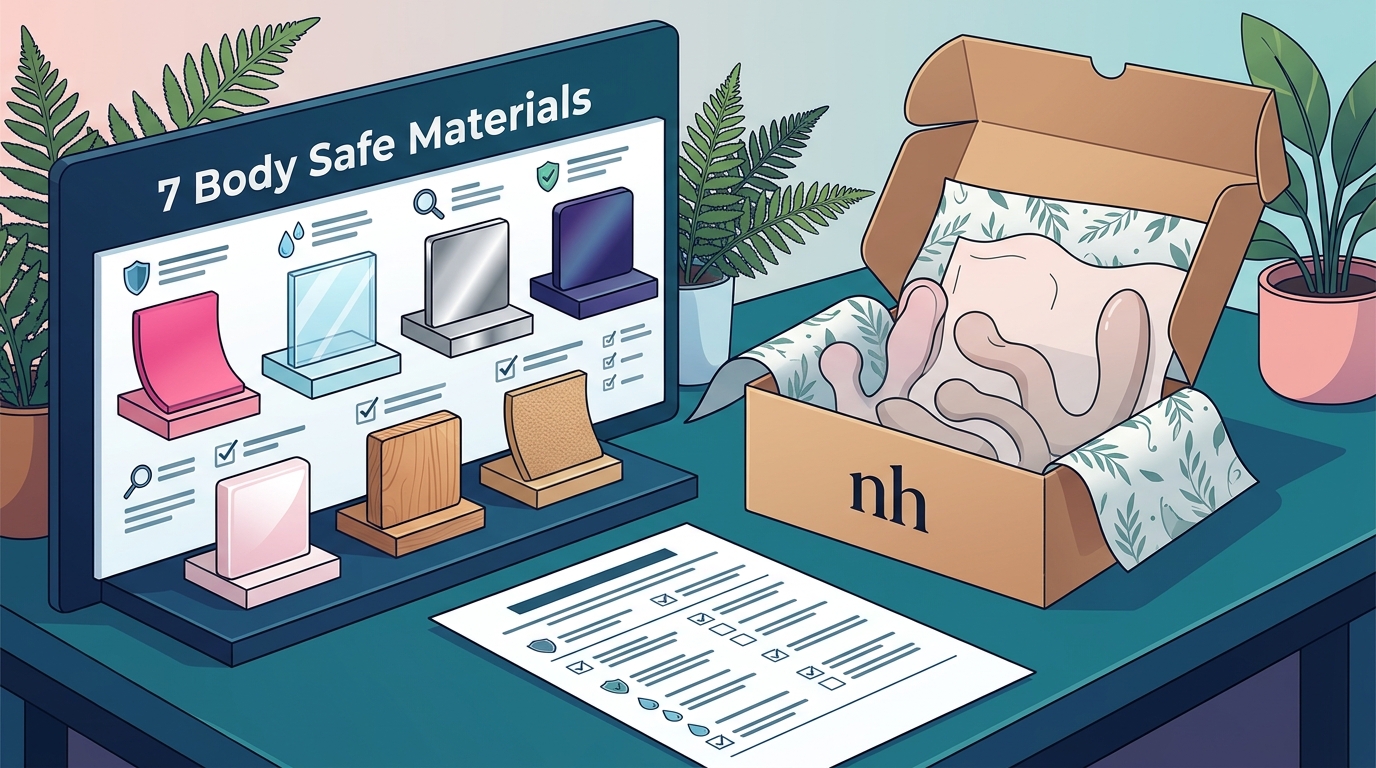
5. Ceramic
Ceramic is a smooth, non-porous material that is safe for the body and easy to maintain. It is typically coated with a glaze that creates a seamless surface, preventing bacteria from hiding in microscopic pores. This material is a great alternative to glass for those who prefer a slightly different texture and weight distribution.
6. TPE (Thermoplastic Elastomer)
TPE is a soft, flexible material that mimics the feel of human skin, though it is porous. While not as durable as silicone, it is often used in budget-friendly beginner kits. Because it is porous, it requires careful cleaning and cannot be fully sterilized, so it is best used with a condom to maintain hygiene and extend the life of the toy.
7. TPR (Thermoplastic Rubber)
Choosing the Right Material for Your Kit
Frequently Asked Questions
Is silicone the only safe material for beginners?
No, while silicone is the most popular, other non-porous materials like borosilicate glass, stainless steel, and ABS plastic are also body safe. The key is to avoid porous materials like jelly rubber or PVC, which can harbor bacteria and leach chemicals.
How do I clean porous materials like TPE?
Wash porous materials with warm water and mild, fragrance-free soap immediately after use. You cannot boil or use harsh chemicals on them. Using a condom over the toy is the best way to protect both the material and your body from bacteria.
Can I use oil-based lubricants with silicone toys?
No, oil-based lubricants can degrade silicone over time, causing it to become sticky or break down. Always use water-based lubricants with silicone toys to maintain their integrity and safety.
What should I avoid when buying a starter kit?
Avoid toys made from jelly rubber, PVC, or materials with strong chemical odors. These are often porous and may contain phthalates or other harmful plasticizers. Stick to reputable retailers that clearly label their materials as body safe.
How do I store my sex toys to keep them safe?
Store toys in individual breathable pouches or boxes to prevent them from touching each other. Some materials can react when in direct contact, so keeping them separated ensures they remain in good condition and hygienic. Learn more: Buy Sex Toys NZ.